How to Make Matcha the Traditional Way: The Tools You Actually Need

In short: You need good matcha, hot (not boiling) water, a wide bowl and a bamboo whisk. Sift the powder, add a little water, and whisk fast from the wrist in a zigzag. The whole thing takes about two minutes.
In Japan, a bowl of matcha is something you make, not just pour. That small ritual is part of the pleasure — and once you know the steps, it’s easier than brewing coffee. Let me show you.
The tools: what each one does
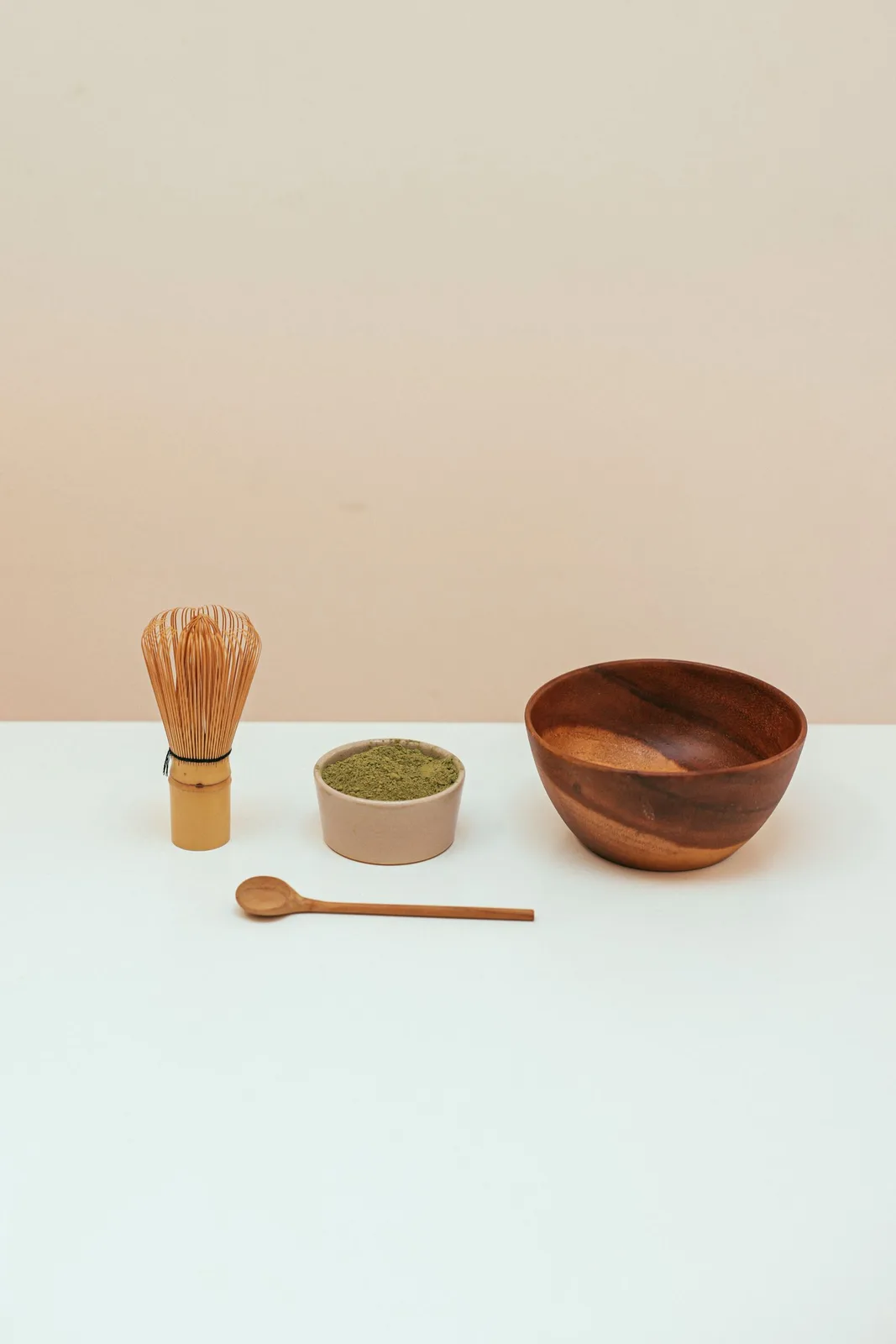
| Tool | Japanese name | What it does | Can you skip it? |
|---|---|---|---|
| Tea bowl | chawan | A wide bowl gives the whisk room to move | A wide cereal or soup bowl works |
| Bamboo whisk | chasen | Whips air into the tea for a smooth froth | Not really — this one matters most |
| Bamboo scoop | chashaku | Measures the powder | Yes — use a ½ teaspoon |
| Sifter | furui | Breaks up clumps before you add water | A small tea strainer works |
| Whisk holder | kusenaoshi | Keeps the whisk’s shape while it dries | Yes, but your whisk will last longer with one |
Koto’s tip: If you only buy one thing, buy the bamboo whisk. Its many fine prongs are what create the soft, creamy foam. A metal whisk or spoon leaves clumps.

What you need for one bowl
- Matcha: about 2 g (2 scoops with a chashaku, or about 1 level teaspoon)
- Water: about 60–70 ml (2–2½ fl oz)
- Water temperature: around 70–80 °C (160–175 °F) — hot, but not boiling
Why not boiling water? Very hot water brings out more bitterness and can dull matcha’s fresh, grassy sweetness. If you don’t have a thermometer, boil the water and let it rest for a few minutes, or pour it into the bowl first to warm the bowl, which also cools the water.
Step by step
1. Warm the bowl and soften the whisk
Pour hot water into the bowl, then dip the tips of the whisk in it for a few seconds. The bamboo becomes softer and less likely to break. Empty the bowl and wipe it dry.
2. Sift the matcha into the bowl
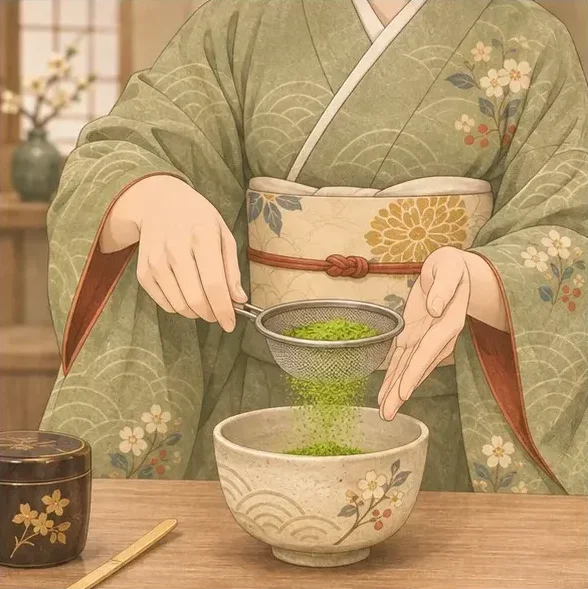
Matcha is so fine that it forms tiny clumps in the tin. Pressing it through a small sifter takes ten seconds and is the easiest way to avoid lumps.
3. Add a little water
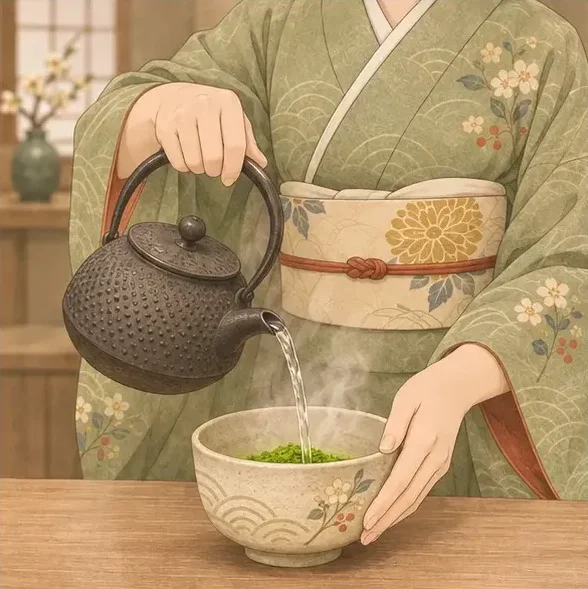
Pour in about 60–70 ml of hot water.
4. Whisk quickly in a zigzag
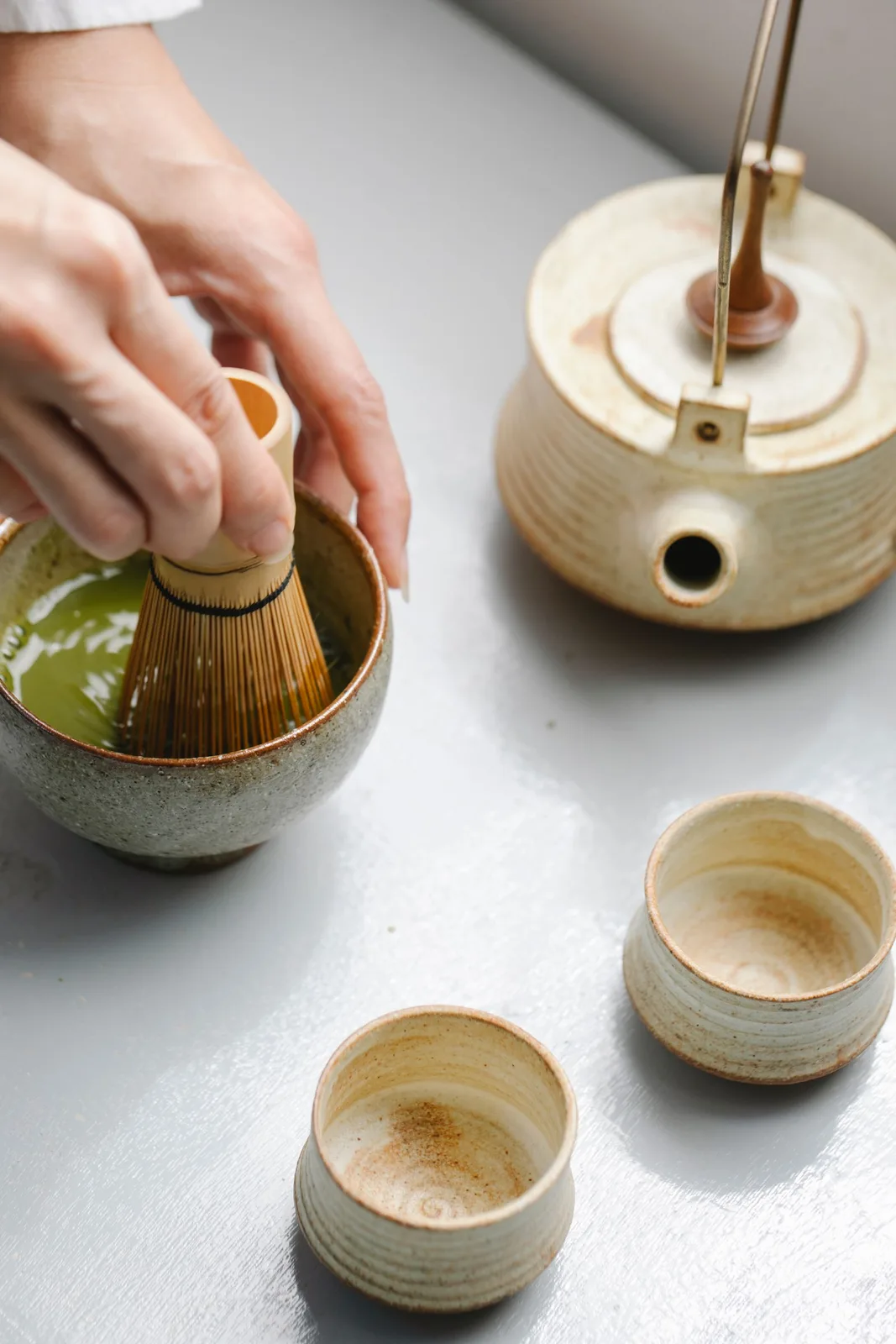
Hold the bowl steady with one hand. With the other, whisk quickly back and forth in a zigzag — like drawing the letter “M” or “W” — moving from the wrist, not the whole arm. Keep the prongs just touching the bottom at first, then lift them slightly into the tea. After about 15–20 seconds, a layer of fine foam should cover the surface.
Koto’s tip: Don’t stir in circles! Circles just swirl the tea around. The fast back-and-forth motion is what makes the foam.

5. Finish with a gentle lift
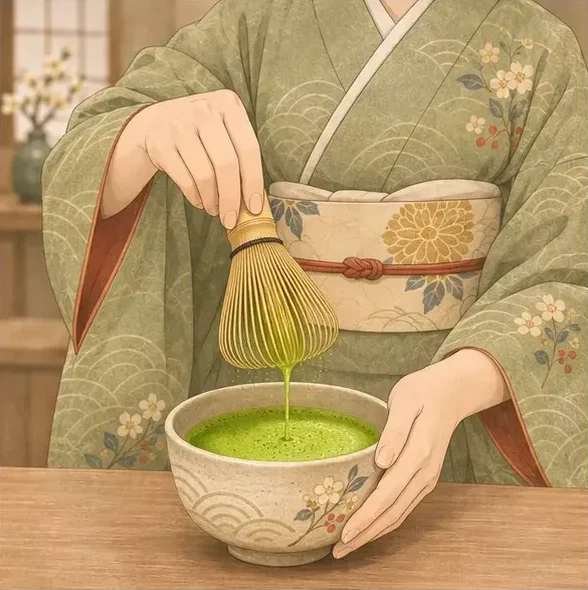
To finish, slow down, make a few light strokes across the surface to pop any big bubbles, and lift the whisk out from the center. A small mound of foam in the middle is a sign of a carefully made bowl.
6. Drink right away
Matcha starts to settle within a few minutes, so enjoy it while the foam is fresh. In Japan, it’s usually served with a small sweet first — the sweetness balances matcha’s gentle bitterness.
Usucha and koicha: thin and thick tea
What we just made is usucha (“thin tea”), the everyday style. In formal tea gatherings, hosts may also serve koicha (“thick tea”): roughly twice the matcha and half the water, slowly kneaded into a thick, glossy paste rather than whisked into foam. Koicha uses the highest grades of matcha, because there is nowhere for bitterness to hide.
Common mistakes (and how to fix them)
| Problem | Likely cause | Fix |
|---|---|---|
| Bitter taste | Water too hot, or too much powder | Cool the water to 70–80 °C; use about 2 g |
| Lumps | Not sifted | Sift first — every time |
| No foam | Stirring in circles, or whisking too slowly | Fast zigzag from the wrist |
| Big bubbles | Whisking too high in the bowl | Finish with light strokes across the surface |
| Dull, brownish color | Old or poorly stored matcha | Store opened matcha airtight in the fridge and use it within a few weeks |
Caring for your bamboo whisk
- Rinse it in warm water only — no soap.
- Shake off the water and let it dry on a whisk holder, or standing upright on its handle.
- Don’t store it in a closed box while wet; it can go moldy.
- A bamboo whisk is a consumable. With daily use, prongs will eventually break — that’s normal.
FAQ
Can I make matcha without a bamboo whisk? You can. A small electric milk frother does a decent job, and shaking matcha with water in a sealed jar works in a pinch. You won’t get the same fine, creamy foam, but the tea will be smooth.
Can I use cold water? Yes — for iced matcha, whisk the powder with a little room-temperature water first, then pour it over ice. Cold water alone makes it harder to dissolve.
How much caffeine does a bowl have? Because you drink the whole leaf, matcha generally has more caffeine than the same amount of steeped green tea. The exact amount varies with the grade and how much powder you use.
Which matcha should I buy for this? For drinking straight, choose a higher grade, often sold as “ceremonial.” See our guide: Ceremonial vs Culinary Matcha.
Related
Our picks
Bamboo whisk (chasen), 80 prongs
The one tool that really changes the result. Its fine prongs whip air into the tea and break up clumps in a way a spoon or metal whisk can't.
Best for: Anyone who wants proper foam — buy this first
View at Amazon →Matcha starter set (bowl, whisk, scoop, whisk holder)
Everything in one box, chosen to work together. Handy if you also want a wide bowl that gives the whisk room to move.
Best for: Gifts, or starting from zero
View at Yunomi →Ceremonial-grade matcha
A smooth, bright matcha that whisks up easily — forgiving while you learn the technique.
Best for: Drinking straight, with water only
View at Jade Leaf Matcha →