What Is Hojicha? Japan's Roasted Green Tea, Explained
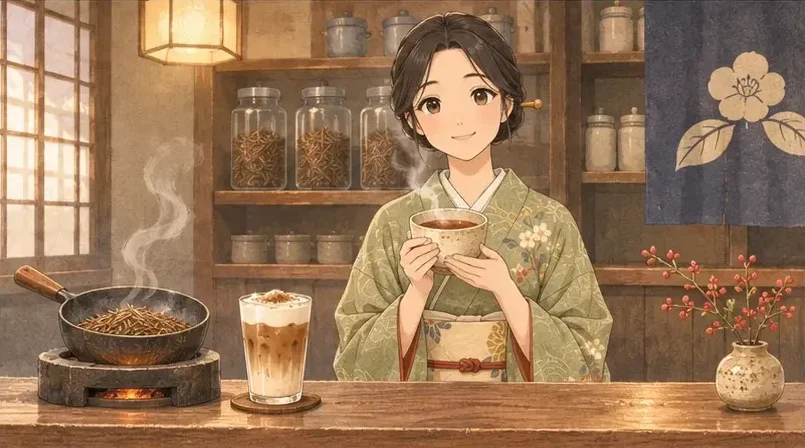
In short: Hōjicha (ほうじ茶) is Japanese green tea that has been roasted over high heat. Roasting turns the leaves reddish brown and gives a warm, toasty, caramel-like flavor with very little bitterness. It’s a favorite after meals, in the evening and in cafés as a hojicha latte.
How hojicha is made
- Start with green tea. Hojicha is usually made from bancha (later-harvest leaves), sencha or tea stems.
- Roast it. The leaves are roasted at high temperature, traditionally in a porcelain pot over charcoal, now often in rotating drum roasters.
- Cool and pack. The roast level — light, medium or dark — changes the flavor.
Roasting changes the leaves’ chemistry: the grassy notes fade and toasty, sweet aromas appear, and bitterness and astringency soften. It’s also a good way to make delicious tea from larger, later-harvest leaves.
Koto’s tip: If you walk past a tea shop in Japan and smell something like toasted nuts and caramel, they’re probably roasting hojicha. Some shops roast it right at the door!
What does hojicha taste like?
- Toasty and nutty, a little like roasted barley or coffee, but much lighter
- Smooth and sweet, with very little bitterness or astringency
- Light-bodied — the cup is clear reddish brown
Because it’s gentle, many families in Japan serve it with meals, to children, and to guests in the evening.
Is hojicha low in caffeine?
Hojicha is often described as lower in caffeine, especially when it’s made from later-harvest leaves (bancha) or stems, which tend to contain less caffeine than young spring leaves. But sources disagree, and some hojicha has about as much as ordinary green tea — it depends on the leaves used. It definitely contains caffeine, so if you avoid caffeine completely, choose a caffeine-free drink such as barley tea (mugicha) instead.
How to brew hojicha
| Water | Amount | Time |
|---|---|---|
| Hot, about 90–100 °C (195–212 °F) | About 2 tablespoons of leaves for 2 cups | About 30 seconds |
Hojicha leaves are big and fluffy, so use a generous amount. Unlike delicate green teas, it likes very hot water, so it’s hard to get wrong. Re-steep once or twice.
Iced hojicha: brew it stronger and pour it over ice, or cold-brew leaves in water in the fridge overnight.
How to make a hojicha latte
- Put 2 teaspoons of hojicha powder in a cup (or brew a very strong hojicha with leaves).
- Add about 30 ml (2 tablespoons) of hot water and whisk until smooth.
- Pour in 150–200 ml of warm, frothed milk (dairy or oat milk both work well).
- Sweeten to taste with sugar, honey or maple syrup.
Koto’s tip: Hojicha and a little brown sugar or maple syrup are a perfect match. For a café-style finish, dust a bit of hojicha powder on top of the foam.
Hojicha vs other Japanese teas
| Hojicha | Sencha | Matcha | Genmaicha | |
|---|---|---|---|---|
| Color | Reddish brown | Clear yellow-green | Bright green | Golden |
| Flavor | Toasty, caramel | Fresh, grassy | Creamy, umami | Nutty (roasted rice) |
| Bitterness | Very low | Medium | Low–medium | Low |
| Water | Very hot | 70–80 °C | About 80 °C | Very hot |
See all the main teas in Japanese Tea Types Explained.
Make your own hojicha at home
Have some ordinary green tea leaves that taste a bit old? Roast them:
- Put a handful of leaves in a dry frying pan over medium-low heat.
- Keep shaking the pan so they don’t burn.
- After a few minutes, when the leaves turn brown and smell toasty, take them off the heat.
- Let them cool, then brew with hot water.
FAQ
Is hojicha the same as roasted barley tea? No. Barley tea (mugicha) is made from roasted barley and contains no tea leaves or caffeine. Hojicha is real tea.
Can I bake with hojicha? Yes — hojicha powder works in cookies, cakes and ice cream, just like matcha, with a warm, toasty flavor.
How should I store hojicha? In an airtight container, away from light, heat and smells. Its roasted aroma fades over time, so use it within a few weeks of opening.
Related
Our picks
Loose-leaf hojicha from Japan
Small-farm hojicha in different roasts, from light and nutty to deep and smoky.
Best for: Drinking hot after meals or in the evening
View at Yunomi →Hojicha powder for lattes
Finely ground roasted tea that dissolves into milk — like a matcha latte, but toasty and mellow.
Best for: Latte lovers and baking
View at Amazon →Kyusu teapot
A fine built-in strainer and side handle make loose-leaf hojicha easy to brew and pour.
Best for: Brewing loose tea every day
View at Amazon →