Ceremonial vs Culinary Matcha: Which Grade Should You Buy?
In short: “Ceremonial” and “culinary” are marketing labels, not official grades. Ceremonial usually means a higher-quality matcha meant for drinking with water only; culinary means a stronger, cheaper matcha for lattes and baking. Judge quality by color, origin, harvest and taste — not by the label.
Shopping for matcha outside Japan can be confusing. One tin says “ceremonial,” another says “premium,” a third says “culinary” — and the prices range widely. Let me explain what these words mean and how to choose.
First, the surprising part: there is no official “ceremonial grade”
In Japan, you won’t usually see matcha sold as “ceremonial” or “culinary.” These terms became popular with overseas sellers as a simple way to separate drinking matcha from cooking matcha. There is no shared standard behind them, so one brand’s “ceremonial” can be very different from another’s.
That doesn’t make the labels useless — they tell you what the seller intends the matcha for. But to know what you’re really buying, look at the clues below.
What actually decides matcha quality
1. Color
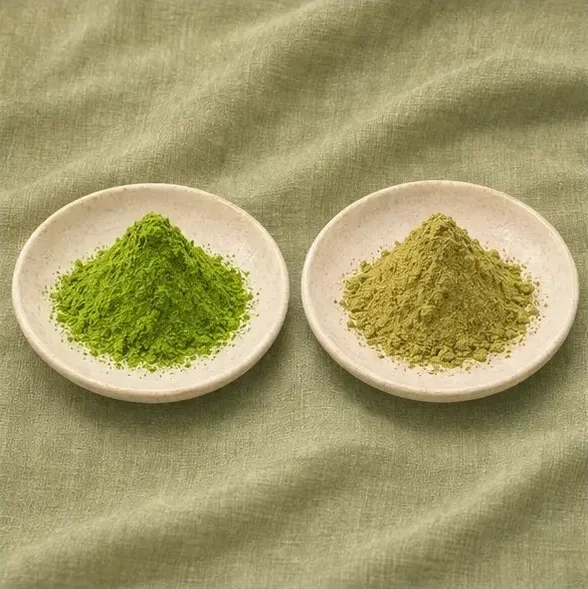
High-quality matcha is a vivid, bright jade green. Lower grades look duller, more yellowish or olive. Color comes from how long the plants were shaded and from using young leaves, so it’s one of the most reliable signs you can check with your own eyes.
2. Harvest
The first harvest of the year (ichibancha, in spring) produces the most tender leaves, with more sweetness and umami. Later harvests are tougher and more bitter, and are more often used for cooking-grade matcha. Good sellers often say which harvest they use.
3. Origin
Japan’s best-known matcha regions include Uji (Kyoto), Nishio (Aichi), Yame (Fukuoka) and Kagoshima. A tin that names a specific region — or even a farm — is generally a better sign than one that only says “Japanese green tea.” Check the country of origin too: not all matcha sold abroad is grown in Japan.
4. Texture
Fine matcha feels silky between your fingers, like eyeshadow. Coarser powder feels gritty and doesn’t whisk as smoothly.
5. Taste
Whisked with water only, good drinking matcha tastes smooth, sweet and savory (umami), with a soft, pleasant bitterness. Culinary matcha tastes sharper and more astringent — which is actually an advantage once you add milk or sugar, because the matcha flavor still comes through.
Ceremonial vs culinary at a glance
| “Ceremonial” | “Culinary” | |
|---|---|---|
| Meant for | Drinking with water only | Lattes, smoothies, baking, desserts |
| Color | Vivid, bright green | Duller, olive to yellowish green |
| Taste | Smooth, sweet, umami | Stronger, more bitter and astringent |
| Typical harvest | Often first harvest | Often later harvests |
| Price | Higher | Lower per gram |
Which should you buy?
- You want to drink matcha the traditional way → a ceremonial (drinking) grade. Expensive matcha is wasted in a latte, but cheap matcha is very noticeable when drunk straight.
- You mostly make matcha lattes → a good culinary or “latte” grade is fine, and often tastes better with milk.
- You bake → culinary. Heat and other ingredients hide the subtle flavors of a high grade anyway.
- You’re not sure yet → start with a small tin of drinking grade. If you love it, you’ll know what good matcha tastes like before buying in bulk.
Koto’s tip: Buy small tins. Matcha loses its color and aroma within weeks of opening, so a 30 g tin you finish quickly beats a big bag that turns dull.

How to store matcha
- Keep it airtight, cold and dark — light, heat, air and humidity all damage matcha.
- An unopened tin can go in the fridge or freezer. Let it come back to room temperature before opening, so moisture doesn’t condense inside.
- Once opened, keep it sealed in the fridge and use it within a few weeks.
FAQ
Is expensive matcha always better? Usually, but not always. Price reflects harvest, origin and processing, and also the brand. Use color, origin and harvest information to check whether the price makes sense.
Is “premium grade” the same as “ceremonial”? These are also seller labels. Some brands use “premium” between ceremonial and culinary, others use it as a synonym. Look at the clues above rather than the name.
Why is my matcha yellow-brown? It’s either a lower grade or it has oxidized from age, heat or air. Oxidized matcha tastes flat and bitter.
Can I use ceremonial matcha for lattes? Of course — it will taste lovely. It’s just a more expensive way to make a latte.
Related
Our picks
Ceremonial-grade matcha
Bright green, smooth and easy to whisk. A reliable first tin for drinking with water only.
Best for: Drinking straight
View at Jade Leaf Matcha →Single-origin matcha from a named Japanese farm
Tells you the region and producer, so you know exactly what you're getting — and can compare.
Best for: Curious drinkers who want to taste the difference
View at Yunomi →Culinary-grade matcha
A bolder, more robust flavor that still tastes like matcha after you add milk, sugar or flour — at a lower price per gram.
Best for: Lattes, smoothies and baking
View at Jade Leaf Matcha →