Kyusu Teapot & Japanese Teacups: A Buying Guide for Green Tea Lovers
In short: A kyūsu (急須) is the Japanese teapot for brewing loose-leaf green tea. For most people the best first kyusu is a side-handle pot of about 250–350 ml with a fine built-in filter. Pair it with a few small cups — yunomi for everyday tea, or small, wide cups for fine teas like gyokuro.
Why use a kyusu?
Japanese green teas, especially fukamushi (deep-steamed) sencha, have small, fine leaf pieces. A kyusu is designed for them:
- A fine filter inside the spout keeps leaves out of your cup.
- A wide body lets leaves open fully.
- A side handle lets you pour with one hand and tilt the pot to the last drop — which matters, because leftover water keeps steeping and makes the next brew bitter.
See Japanese Tea Types Explained for the right water temperature and time for each tea.
Handle styles
| Style | Japanese | What it’s like |
|---|---|---|
| Side handle | yokode (横手) | The classic Japanese kyusu. Right-handed pours are natural; left-handed versions exist |
| Back handle | ushirode (後手) | Like a Western teapot; good for left-handers and bigger pots |
| Top handle | uwade (上手) | Bamboo or wire handle over the lid; often larger, for hojicha or bancha |
| No handle | hōhin (宝瓶) | A small open pot for gyokuro and fine sencha brewed at low temperature — cool enough to hold |
Koto’s tip: Most side-handle kyusu are made for pouring with the right hand. If you’re left-handed, look for a “left-handed kyusu” or choose a back-handle pot.

Size
| Size | Cups | Good for |
|---|---|---|
| 150–200 ml | 1–2 small cups | Gyokuro and fine sencha |
| 250–350 ml | 2–3 cups | Everyday sencha — the most useful size |
| 400 ml+ | 3–5 cups | Families, hojicha, genmaicha, guests |
Japanese tea is often served in small amounts and brewed several times, so a smaller pot than you expect is usually right.
Filter types
- Ceramic filter (sasame): many tiny holes in the clay behind the spout. Traditional and doesn’t affect taste; the fine type is great for most sencha.
- Stainless steel mesh (built-in, curved): very fine and good for deep-steamed sencha’s small leaf pieces. Easy to find and clean.
- Removable basket: convenient and easy to clean, but leaves have less room to open. Fine for beginners and for larger-leaf teas like hojicha.
Clay and famous kyusu towns
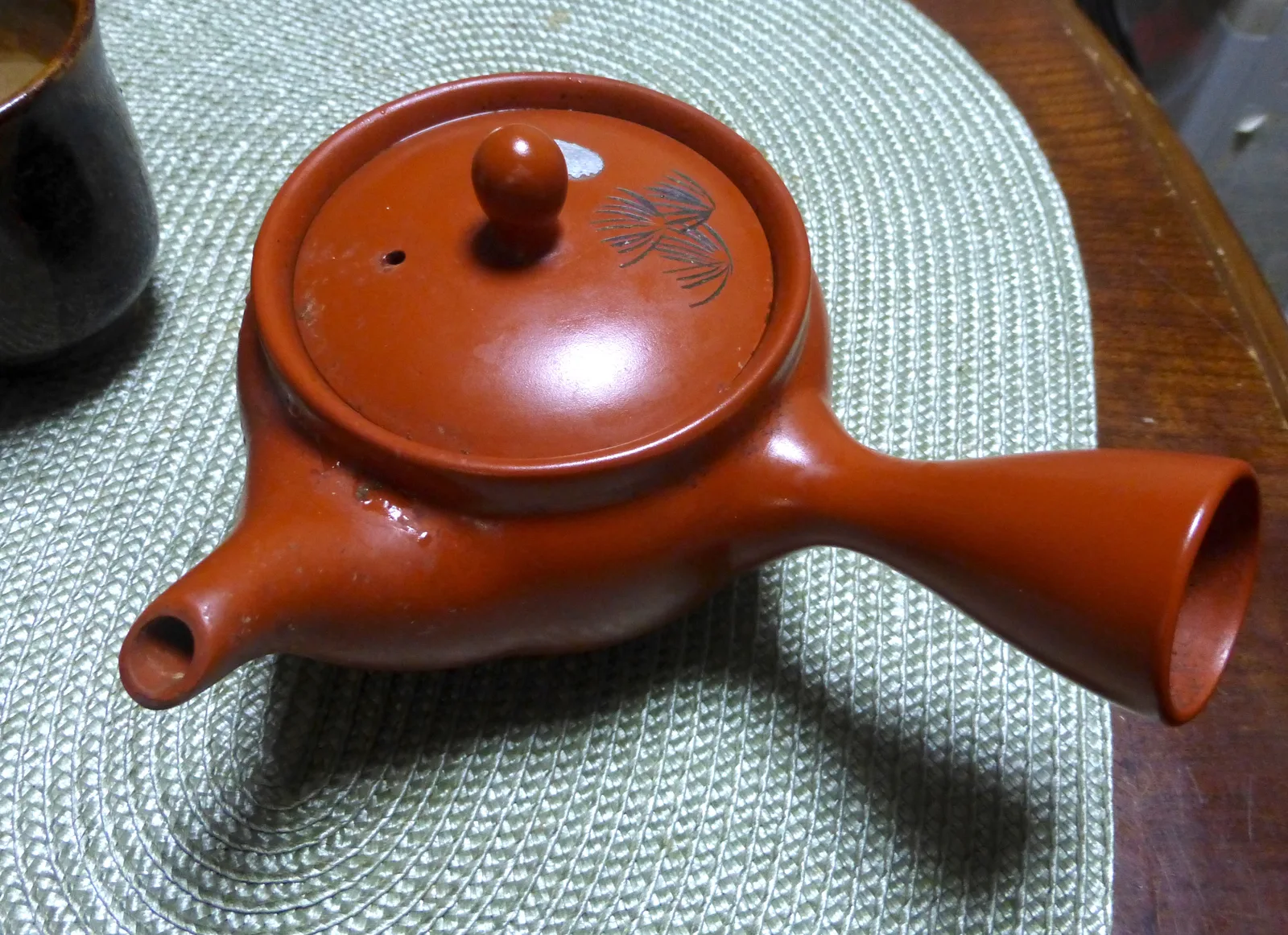
- Tokoname (常滑, Aichi): the best-known kyusu town. Its reddish, unglazed clay is iron-rich, and many tea fans say it gives sencha a rounder, mellower taste.
- Banko (萬古, Yokkaichi, Mie): known for purple-brown clay and durable pots; a long history of everyday teapots.
- Glazed porcelain (e.g. Arita, Hasami): smooth inside, doesn’t absorb flavor — good if you switch between different teas.
Koto’s tip: An unglazed pot slowly absorbs the tea’s aroma over time. Many people keep one unglazed kyusu just for sencha, and use a glazed pot for scented or roasted teas.

Choosing cups
| Cup | Shape | Best for |
|---|---|---|
| Yunomi (湯呑み) | Tall, narrow, no handle | Everyday tea; stays warm |
| Kumidashi (汲出) | Wide and shallow, often with saucers | Serving guests; cools tea slightly faster |
| Small gyokuro cups | Tiny, thin-walled | Gyokuro and fine sencha in small sips |
A light inside color shows off green tea’s color. Thin rims feel delicate; thicker cups hold heat. Buying cups in pairs or sets of five is traditional in Japan (sets of four are often avoided).
How to use and care for a kyusu
- Warm the pot and cups with hot water first, then discard it.
- Brew, then pour into each cup a little at a time, going back and forth, so every cup has the same strength.
- Pour every last drop.
- After use, empty the leaves and rinse with hot water. Avoid soap on unglazed clay — it can absorb the smell. A soft brush helps clean the filter.
- Dry with the lid off so it doesn’t get musty.
FAQ
Can I use a kyusu for black tea or herbal tea? Yes, but a glazed pot is better if you switch between flavored teas, since unglazed clay absorbs aromas.
Can I brew matcha in a kyusu? No — matcha is powder that you whisk in a bowl. See How to Make Matcha the Traditional Way.
My filter is clogged. What do I do? Rinse it from the outside toward the inside with running water, and use a soft brush. Fine leaves are normal with deep-steamed tea.
Related
Our picks
Kyusu with side handle (about 250–350 ml)
The classic Japanese teapot: a built-in fine filter and side handle make loose-leaf green tea easy to brew and pour.
Best for: Everyday sencha for 1–3 people
View at Amazon →Tokoname kyusu
Unglazed clay from one of Japan's best-known teapot towns; many tea fans love it for sencha.
Best for: A special teapot or gift
View at Amazon →Japanese yunomi teacups
Tall, handle-less cups that keep tea warm, for everyday drinking.
Best for: Daily tea at home or at work
View at Amazon →