Oshogatsu: How Japan Celebrates the New Year
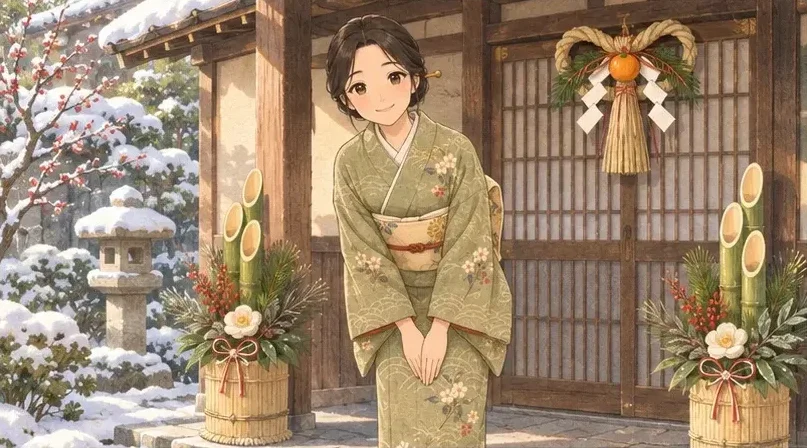
In short: Oshōgatsu (お正月) is the Japanese New Year, and it’s the most important holiday of the year. Many businesses close from around December 29 to January 3, and families gather at home. People clean the house, eat long noodles on New Year’s Eve, listen to temple bells at midnight, visit a shrine in the first days of January, and eat special New Year dishes called osechi.
Why New Year matters so much in Japan
In Japanese tradition, the New Year is when the toshigami (年神), the god of the new year, visits each home to bring good harvests and happiness. Many customs are about welcoming this god — cleaning the house, decorating the entrance and offering rice cakes — and about starting the year fresh and pure.
Since Japan adopted the Western calendar in 1873, New Year has been celebrated on January 1.
Koto’s tip: The first three days of January are called sanganichi (三が日). Shops and offices traditionally close, and it’s the calmest time of the year in big cities.
Before New Year: preparing the home
Ōsōji (大掃除), the big clean
In late December, families, schools and offices do a thorough year-end clean — washing windows, clearing out drawers and wiping every corner. A clean house is ready to welcome the new year’s god.
New Year decorations
- Kadomatsu (門松): a pair of pine and cut bamboo arrangements placed at both sides of an entrance. They act as a marker for the god to find the home.
- Shimekazari (しめ飾り): a sacred straw rope decoration hung at the door, often with paper streamers, to keep bad luck out.
- Kagami mochi (鏡餅): two round rice cakes stacked on top of each other, crowned with a small bitter orange (daidai). It’s an offering for the god, usually placed in the living room.
Decorations can go up from December 13, the traditional start of New Year preparations, and most families put them up between about December 26 and 28 or on the 30th. Many avoid December 29 (the number 9, ku, can sound like “suffering”) and December 31 — a “one-night decoration” (ichiya-kazari) is thought to be unwelcoming to the god and can recall funeral customs. Customs vary by region and family.
Nengajō (年賀状), New Year cards
Japanese people send New Year postcards to friends, relatives and colleagues. Cards posted before about December 25 are delivered together on January 1. Families in mourning send a short notice in November or December instead, asking people not to send New Year greetings that year.
New Year’s Eve: Ōmisoka (大晦日)
- Toshikoshi soba (年越しそば): long buckwheat noodles eaten on New Year’s Eve, often said to wish for a long life and to “cut off” the troubles of the year, since soba noodles break easily.
- Joya no kane (除夜の鐘): at midnight, Buddhist temples ring their great bells 108 times — a number traditionally linked to 108 human desires or worries in Buddhism. Some temples let visitors take a turn.
- TV at home: many families watch the long year-end music show on TV, then quietly welcome the new year.
January 1–3: the first days of the year
Hatsumōde (初詣), the first shrine or temple visit
Most people visit a shrine or temple in the first days of January to pray for a good year. Famous shrines attract huge crowds; smaller neighborhood shrines are calmer. Read our full guide: Hatsumode: Japan’s First Shrine Visit of the Year.
Osechi ryōri (おせち料理), New Year food
Beautiful boxes of cold dishes, each with a lucky meaning — black beans for good health, herring roe for many children, golden chestnuts for wealth. See Osechi Ryori: The Meaning of Each Dish.
Ozōni (お雑煮), New Year soup
A soup with rice cakes, eaten on New Year’s morning. Every region and family has its own style:
- Eastern Japan (Tokyo area): clear broth with grilled square mochi
- Western Japan (Kyoto area): white miso soup with round mochi
Otoshidama (お年玉), New Year money
Children receive money from parents, grandparents and relatives in small decorated envelopes called pochibukuro. For many kids, it’s the highlight of the holiday.
Other “firsts” of the year
- Hatsuhinode (初日の出): watching the first sunrise of the year, from mountains, beaches or tall buildings.
- Hatsuyume (初夢): the first dream of the year. Dreaming of Mount Fuji, a hawk or an eggplant is said to be lucky.
- Fukubukuro (福袋): “lucky bags” — sealed bags of goods sold by shops at a discount at the start of January.
- Kakizome (書き初め): the first calligraphy of the year, usually done on January 2.
After New Year
- Matsu no uchi (松の内): the period while decorations stay up, usually until January 7 in Tokyo and the east, and often until January 15 in western Japan.
- Nanakusa-gayu (七草粥): on January 7, people eat rice porridge with seven spring herbs to rest the stomach after the feasting.
- Kagami biraki (鏡開き): the kagami mochi is broken into pieces (never cut with a knife) and eaten, often in sweet red bean soup. Most of Japan does this on January 11; parts of western Japan wait until the 15th or 20th, and some homes in Kyoto do it as early as January 4.
Koto’s tip: Mochi is very sticky and chewy. Every New Year, news reports remind people — especially older people and small children — to cut mochi into small pieces and eat slowly.
How to celebrate a Japanese New Year at home
- Clean the house in the last days of December.
- Eat soba noodles on New Year’s Eve.
- Make ozoni with store-bought mochi on January 1.
- Give otoshidama to children in small envelopes.
- Write your goal for the year with a brush pen — your own kakizome.
FAQ
Is New Year’s Day a holiday in Japan? Yes. January 1 is a national holiday, and most companies close for several days around it.
Do Japanese people celebrate Lunar New Year? Generally no. Japan celebrates New Year on January 1, though some Chinese communities in Japan celebrate Lunar New Year too.
What do people say for “Happy New Year”? Akemashite omedetō gozaimasu (after the New Year begins). Before the New Year, people say Yoi otoshi o — “Have a good year-end.”
Related
- Osechi Ryori: Japanese New Year Food and the Meaning of Each Dish
- Hatsumode: Japan’s First Shrine Visit of the Year
- Setsubun — the next big seasonal event, in February
Our picks
Otoshidama envelopes (pochibukuro)
Small decorated envelopes used to give New Year money to children. Pretty enough to use as gift-card or note envelopes, too.
Best for: Families celebrating a Japanese-style New Year
View at Amazon →Kagami mochi decoration
A reusable display version of the stacked rice cakes with a bitter orange on top — the classic New Year ornament.
Best for: Decorating at home
View at Amazon →Japanese snack box (winter / New Year edition)
Winter boxes often include New Year sweets and seasonal flavors you can't find abroad.
Best for: A New Year gift
View at Bokksu →