Osechi Ryori: Japanese New Year Food and the Meaning of Each Dish
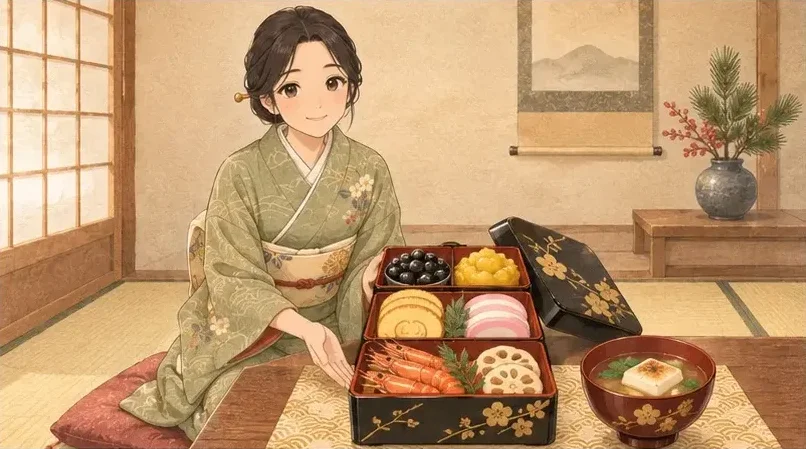
In short: Osechi ryōri (おせち料理) is a set of special dishes eaten during the first days of the New Year in Japan. They’re packed in stacked boxes called jūbako, and almost every dish is a pun or a symbol: a wish for good health, a good harvest, success, many children or a long life.
Why osechi exists
Osechi grew out of food offered to the gods at seasonal festivals. Over time, it became the meal for New Year, when the god of the new year is welcomed into each home.
Many dishes are sweet, salty or vinegared, so they keep for several days without cooking. Traditionally this let everyone — especially the people who usually cooked — rest during the first three days of January.
Koto’s tip: The stacked boxes have a meaning too: piling up the boxes is said to “pile up” happiness and good fortune.

What’s inside: dishes and their meanings
| Dish | What it is | The wish |
|---|---|---|
| Kuromame (黒豆) | Black soybeans simmered in sweet syrup | Mame also means “hardworking and healthy” — to work diligently and stay well |
| Kazunoko (数の子) | Herring roe | Thousands of eggs — many children and family prosperity |
| Tazukuri (田作り) | Small dried sardines glazed with sweet soy | Literally “making rice fields”: sardines were once used as fertilizer, so they wish for a good harvest |
| Datemaki (伊達巻) | A sweet rolled omelet mixed with fish paste | Shaped like an old scroll — a wish for learning and culture |
| Kurikinton (栗きんとん) | Mashed sweet potato with sweet chestnuts | Golden color — wealth and good fortune |
| Kamaboko (蒲鉾) | Red and white fish cakes | Red and white are festive colors; the half-moon shape is said to look like the first sunrise |
| Kōhaku namasu (紅白なます) | Pickled daikon and carrot strips | Red and white again — celebration and peace |
| Ebi (海老) | Shrimp or prawns | Its curved back looks like an elderly person — a wish to live long enough to bend with age |
| Kobumaki (昆布巻き) | Kelp rolls tied around fish | Kobu sounds like yorokobu, “to rejoice” |
| Renkon (蓮根) | Lotus root | Its holes let you “see through” to the future — a clear view of the year ahead |
| Tai (鯛) | Sea bream | Tai sounds like medetai, “auspicious, joyful” |
Not every box contains every dish, and many families add their own favorites — even roast beef or other modern dishes.
How the boxes are arranged
Traditionally, each tier has a theme. In the formal four-tier style:
- First tier (ichi no jū): iwai-zakana, celebratory bites. Three are considered essential — kuromame, kazunoko and tazukuri (called sanshu-kō, “the three dishes”).
- Second tier (ni no jū): kuchitori, sweet dishes such as kurikinton, datemaki and kamaboko.
- Third tier (san no jū): grilled seafood, such as sea bream and prawns.
- Fourth tier (yo no jū): simmered vegetables (nishime), such as lotus root, taro and carrot. It’s written with a different character for “four,” because the usual word shi sounds like “death.”
Which dish goes in which tier varies between sources, regions and families. Today many households use a three-tier box — with grilled and vinegared dishes sharing the second tier — or just one box.
Koto’s tip: Many families in Japan now order osechi from department stores, convenience stores or restaurants in the autumn, and it arrives just before New Year. Making every dish at home takes days!

Ozoni: the New Year soup
Alongside osechi, people eat ozōni (お雑煮), a soup with mochi rice cakes. Styles change across Japan — clear broth with grilled square mochi in the Tokyo area, white miso with round mochi around Kyoto, and countless local versions with different vegetables and fish.
Special chopsticks: iwai-bashi
Osechi is often eaten with iwai-bashi (祝い箸), round chopsticks that are thin at both ends. One end is said to be for people, the other for the gods — so the meal is shared with them.
How to enjoy osechi outside Japan
You don’t need a full set of boxes to enjoy the idea:
- Pick three easy dishes, for example sweet black beans, a rolled omelet, and a red-and-white plate of fish cake or pickled vegetables.
- Arrange them neatly in a bento box or on a tray, with small separate sections.
- Add a soup with mochi on New Year’s morning.
- Tell the meaning of each dish as you eat — that’s half the fun.
Koto’s tip: Many osechi dishes contain fish, shellfish, egg, soy or wheat. If you’re serving guests, label the dishes for allergies.

FAQ
Is osechi eaten hot or cold? Mostly cold or at room temperature, which is why the dishes are made to keep for several days. The ozoni soup is served hot.
When do people eat osechi? From New Year’s Day, during the first three days of January.
Why is osechi so expensive? Each dish takes skill and time, many ingredients are luxury items like herring roe and prawns, and orders peak at the same time every year.
Related
Our picks
Jubako (tiered lacquer-style food boxes)
Stackable boxes for osechi — also lovely for picnics, parties and bento for a group.
Best for: Making your own osechi at home
View at Amazon →Japanese cookbook for home cooks
Many Japanese home-cooking books include New Year dishes like datemaki, kuromame and ozoni.
Best for: Cooks who want to try a few osechi dishes
View at Amazon →Japanese tea for the New Year table
A pot of good green tea or hojicha is the perfect partner for rich, sweet osechi dishes.
Best for: Tea lovers
View at Yunomi →