Hatsumode: Japan's First Shrine Visit of the Year (and How to Join In)
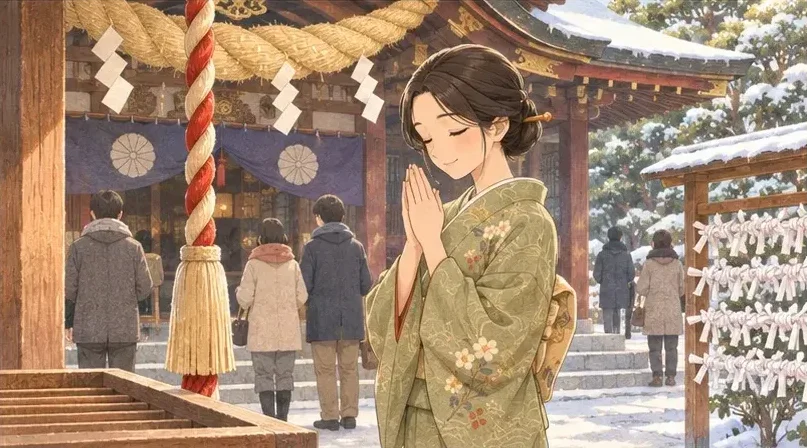
In short: Hatsumōde (初詣) is the first visit of the year to a Shinto shrine or Buddhist temple, usually made between January 1 and 3. People pray for health, success and happiness, buy a new protective charm, draw a fortune slip, and enjoy food stalls. Visitors are welcome to join in.
Shrine or temple?
Both are fine for hatsumode, and many Japanese people visit whichever is closest or most famous.
| Shrine (jinja / 神社) | Temple (tera / 寺) | |
|---|---|---|
| Religion | Shinto | Buddhism |
| How to spot it | A torii gate at the entrance | A large gate with guardian statues, a main hall, often a pagoda |
| How to pray | Bow twice, clap twice, bow once | Put your hands together quietly — no clapping |
How to pray at a shrine, step by step
1. Bow at the torii
Bow lightly before passing under the torii gate. Many people walk along the side of the path — the center is said to be the path of the gods.
2. Purify your hands and mouth at the chōzuya (手水舎)
- Take the ladle in your right hand and rinse your left hand.
- Switch hands and rinse your right hand.
- Pour a little water into your cupped left hand and rinse your mouth (don’t drink from the ladle). Rinse your left hand again.
- Tilt the ladle upright so the remaining water runs down the handle, then put it back.
Koto’s tip: At busy times, some shrines change how purification works — for example, with running water and no ladles. Just follow what people around you are doing.
3. Pray at the main hall
- Toss a coin into the offering box. Any amount is fine — 5 yen coins are popular because go-en sounds like “good connections.”
- If there’s a bell, ring it.
- Bow twice deeply, clap twice, put your hands together and make your wish, then bow once more (ni-rei ni-hakushu ichi-rei). A few shrines use a different style — for example, Izumo Taisha uses four claps — and notices will tell you.
Things to see and do
Omikuji (おみくじ), fortune slips
Pay a small amount and draw a paper fortune. It ranks your luck from daikichi (great blessing) to kyō (bad luck), with advice on health, work, love and travel. If your fortune is bad, you can tie it to the rack at the shrine to leave the bad luck behind. Good fortunes are often taken home.
Omamori (お守り), protective charms
Small cloth charms for safety in traffic, success in exams, good health, a safe birth and more. Many people return last year’s charm to the shrine at New Year so it can be burned respectfully, and buy a new one.
Ema (絵馬), wooden wish plaques
Write your wish on a small wooden plaque and hang it at the shrine. New Year ema often show the animal of that year’s zodiac.
Hamaya (破魔矢), lucky arrows
Decorated arrows sold at New Year to drive away evil and bring good luck to the home.
Food stalls
Big shrines and temples have stalls selling snacks such as amazake (sweet rice drink), roasted chestnuts, grilled squid and taiyaki. They’re part of the festive mood.
Koto’s tip: Charms and fortune slips are religious items, not souvenirs from a shop. Hold them respectfully, and don’t open the inside of an omamori.
When and where to go
- Peak times: midnight on New Year’s Eve and January 1–3. The most famous places draw enormous crowds and long lines, with police directing the flow.
- Quieter times: early morning, or after January 4. Hatsumode is traditionally fine any time during the New Year period (matsu no uchi).
- Well-known places: Meiji Jingu and Sensō-ji in Tokyo, Fushimi Inari Taisha and Yasaka Shrine in Kyoto, Kawasaki Daishi near Tokyo, and Sumiyoshi Taisha in Osaka.
Manners for visitors
- Dress warmly — you may queue outside for a long time in January.
- Keep photos respectful, and check for signs: some halls don’t allow photos inside.
- Don’t eat while walking inside the main grounds unless you’re at the food stall area.
- Bring coins — many offering boxes and stalls don’t take cards.
FAQ
Can non-Japanese visitors do hatsumode? Yes. Shrines and temples welcome everyone. Following the basic manners shows respect.
Do I have to believe in Shinto or Buddhism? No. For most people in Japan, hatsumode is a seasonal custom and a hopeful start to the year rather than a statement of faith.
What if I visit after January 3? That’s fine. Many people visit during the first weeks of January to avoid the crowds.
Related
Our picks
Tokyo and Kyoto shrine and temple tours
Guided walks explain the history and manners as you go — handy on your first visit.
Best for: First-time visitors to Japan
View at GetYourGuide →Kimono rental experiences
Some people wear kimono for their first shrine visit of the year. Rental shops dress you and lend accessories.
Best for: Travelers who want photos in kimono
View at Klook →Japan travel guidebook
Helpful for planning where to go during the New Year holidays, when many shops close.
Best for: Planning a winter trip
View at Amazon →